
Practical guides for cleaner indoor air
Clear, real-world explanations for air purifiers, humidifiers, dehumidifiers, and monitoring — plus simple calculators for room size and CADR.
Start with the problem you want to solve
Interpret readings, find sources and lower particle levels.
Separate moisture, mold, particles and odor problems.
Size with CADR, room volume and target air changes.
Prioritize particle CADR, source control and quiet operation.
Understand sensor limits, ventilation and carbon filtration.
Use CO2 trends to improve occupied-room ventilation.
Browse by topic
Room coverage, CADR, noise, filters, and what actually improves indoor air.
Tools to match room size to CADR/ACH targets and avoid underpowered setups.
HEPA vs carbon, purifier vs humidifier vs dehumidifier, and other common decisions.
HEPA grades, particle capture, leak paths, and what matters in real rooms.
Odors and VOCs: carbon types, contact time, and realistic expectations.
Practical setup tips to reduce triggers: pollen, dust, pets, and indoor irritants.
PM2.5, CO2, VOC sensors—how to interpret readings and spot bad ventilation.
Fresh air, CO2, exhaust fans, air exchange basics, and airflow mistakes.
Humidity targets, winter dryness, cleaning routines, and avoiding mold risk.
Basement dampness, sizing by liters/pints, drainage, and preventing musty air.
Condensation, hidden moisture, remediation basics, and keeping RH under control.
Ozone/ionizers, certifications, filter safety, and standards that matter.
Filter schedules, cleaning, costs, and habits that keep performance stable.
Particles explained: sources, PM2.5 risks, and what reduces exposure indoors.
Featured guides
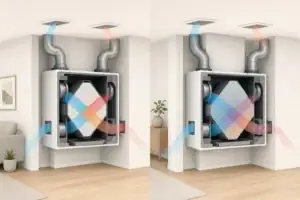
Compare ERV vs HRV for home air quality, including humidity ranges, sizing basics, climate examples, maintenance steps, and…
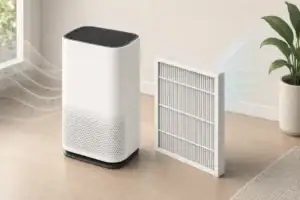
Compare an air purifier vs HVAC filter, with practical CADR and MERV ranges, placement tips, maintenance steps, and…
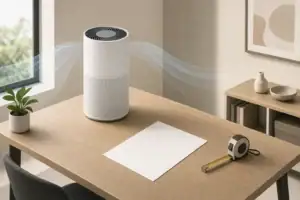
Compare air purifier noise vs CADR using practical decibel ranges, airflow targets, room examples, and a calm checklist…
Latest guides
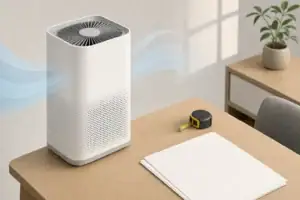
Understand ACH vs CADR with practical room-size math, target ranges, worked examples, and a clear checklist…
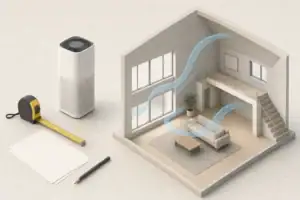
Learn how to adjust CADR for high ceilings using room volume, ACH targets, worked examples, and…

Compare a radon monitor vs air quality monitor: see what each measures, useful ranges, placement tips,…

Understand air quality monitor calibration with practical checks, target ranges, comparison methods, and a checklist for…

Learn why a PM2.5 monitor near a purifier can read low, with practical distance ranges, placement…

Learn CO2 monitor placement for desks and bedrooms, with practical distance and height ranges, a bad-reading…
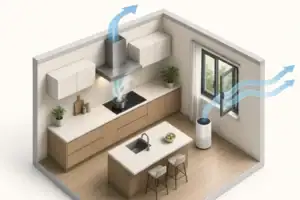
Learn how long to ventilate after cooking, with practical fan and purifier time ranges, airflow checks,…
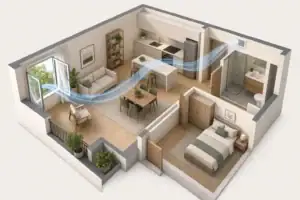
Learn how to air out a new apartment with practical ventilation targets, a VOC and odor…
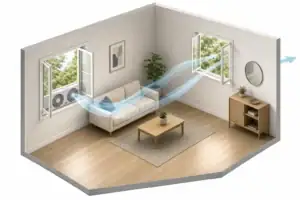
Compare window fan intake vs exhaust setups, estimate airflow, and use practical placement, timing, safety, and…
Practical guidance, clear limits and reputable sources
We translate public-health guidance, engineering concepts and product specifications into practical home decisions. Health and safety articles link to sources such as the EPA, CDC, WHO, ASHRAE and recognized testing standards. We do not present general educational content as medical advice or claim laboratory testing that was not performed.